
Cape Verde: What 3 Qualifiers Taught Me
Cape Verde national football team qualified for the 2026 FIFA World Cup, earning the island nation its first-ever appearance at the men’s tournament. The Blue Sharks, officially representing Cabo Verde in West Africa, secured first place in CAF qualifying Group D after a disciplined campaign built on defensive structure, transitions, and hard-earned away points. Their rise is tied to players such as Ryan Mendes, Bebe, Logan Costa, and goalkeeper Vozinha, while coach Pedro “Bubista” Leitão has helped turn an experienced squad into a difficult opponent. Cape Verde’s football identity is also shaped by its diaspora, with eligible players developing in Portugal, France, the Netherlands, and other European systems. The key lesson is straightforward: do not judge Cape Verde by population or past tournament history; study their defensive spacing, set pieces, and match context before assessing any 2026 fixture.

Photo by Franco Monsalvo on Pexels
Cape Verde’s qualification was not a lucky postcard moment from a beautiful Atlantic archipelago. It was the result of a team repeatedly refusing to lose control of matches, which is a habit I wish I had learned before donating years of my football predictions to chaos. For readers tracking the 2026 tournament, the national team offers a useful case study in how a small football country can build competitive depth through scouting, dual-national recruitment, and tactical patience.
Want a clearer way to follow the tournament picture?
The Quick Comparison
| Category | Cape Verde national football team |
|---|---|
| Common nickname | The Blue Sharks |
| Governing body | Federação Cabo-verdiana de Futebol |
| Confederation | Confederation of African Football, or CAF |
| FIFA membership | Joined FIFA in 1986 |
| First Africa Cup of Nations appearance | 2013 |
| Best AFCON result | Quarter-finals in 2013 and 2023 |
| World Cup record before 2026 | Never qualified |
| 2026 status | Qualified for the FIFA World Cup |
| Home identity | Blue shirts, Atlantic island football culture |
| Key tactical traits | Compact defending, transitions, set pieces |
This table gives the clean version, but football rarely stays clean for more than six minutes. Cape Verde is a national team rather than a club, so its players arrive from different leagues, managers, and tactical environments. The challenge is to turn those separate football educations into one short international camp, often with limited training time and substantial travel between Europe, Africa, and island venues. That context matters when comparing Cape Verde with larger teams such as Senegal, Morocco, Egypt, or Nigeria.
According to the FIFA profile of Cape Verde, the country’s international football story has developed significantly since FIFA membership in 1986. The Confederation of African Football also records Cape Verde’s growing presence in Africa Cup of Nations competition. The useful takeaway is not merely that Cape Verde has improved; it is that the improvement has been sustained across qualification cycles rather than appearing in one isolated tournament.
[Internal Link: 2026 World Cup qualification guide]
Round 1: How Did Cape Verde Build Its 2026 World Cup Breakthrough?
Cape Verde qualified for the 2026 FIFA World Cup by finishing top of CAF qualifying Group D, overcoming established regional competition through consistency, defensive discipline, and timely attacking contributions. The achievement represents the first World Cup qualification in the history of the Cape Verde national football team, making it one of the most important sporting milestones in the country’s history.
The breakthrough becomes more impressive when placed beside the country’s football resources. Cape Verde is a small island nation with a population far below that of most African football powers, yet its eligible player pool extends through a wide diaspora network. Players born or developed in Portugal, France, the Netherlands, Luxembourg, and other European football environments can add technical quality and tactical experience. That does not automatically create a team, of course. International football is full of squads that look excellent on paper and move like shopping carts with one bad wheel.
Cape Verde’s qualification campaign showed the value of avoiding unnecessary tactical drama. The team generally prioritized:
- Compact distances between defenders and midfielders.
- Careful protection of central areas.
- Direct attacks after regaining possession.
- Set-piece routines designed for aerial targets.
- Experienced game management when leading.
- Patience against opponents that controlled possession.
The critical edge case for match analysis is game state. Cape Verde can look far more dangerous after taking the lead because opponents must push full-backs higher and leave space behind them. Conversely, when Cape Verde concedes first, the side may need to create more through controlled possession rather than relying exclusively on counterattacks. That is why a simple “strong team versus weak team” label often misses the actual betting and football question: who scores first, and how does the match change afterward?
Read the wider tournament context before making a prediction.
Round 2: What Tactical Identity Defines the Blue Sharks?
Cape Verde’s tactical identity is built around defensive compactness, quick vertical attacks, and the practical use of experienced forwards and wide players. The Blue Sharks do not need 65 percent possession to compete; their priority is usually to make central progression uncomfortable and attack the spaces created by impatient opponents.
Pedro “Bubista” Leitão has overseen a team that often resembles a well-organized five-minute argument in a narrow hallway: nobody gets much room, every challenge matters, and eventually somebody tries to escape down the flank. Depending on the opponent and available players, Cape Verde can shift between back-four and back-five structures. The important feature is not the formation printed before kickoff but the distances maintained when the ball moves wide.
When defending, Cape Verde commonly tries to protect the zone in front of its center-backs. The midfield line narrows, forcing opponents toward crossing positions instead of allowing easy passes through the middle. This can reduce high-quality central chances, but it also creates a vulnerability: sustained pressure can pin the full-backs deep and produce repeated deliveries into the penalty area.
When attacking, the team looks for three specific triggers:
- A turnover near the halfway line.
- Space behind an advanced opposing full-back.
- A free kick or corner where Cape Verde can use height and timing.
Ryan Mendes has been a prominent attacking figure for the national team, combining experience with the ability to carry the ball into open space. Bebe has also represented Cape Verde with a powerful shooting profile and extensive European experience. Logan Costa adds size and defensive presence, while Vozinha has provided leadership in goal. Player availability matters enormously because Cape Verde’s best structure depends on having defenders comfortable defending space and forwards capable of turning one transition into a shot.
A practitioner-level tip: review the starting lineup and bench before trusting a pre-match angle. Cape Verde’s attacking threat can change sharply if its primary ball carrier is absent, while missing a first-choice center-back may force the midfield line to defend deeper. In international football, one late withdrawal can matter more than a month of club form. I learned that after backing a “safe” selection that became unsafe before the national anthem had finished.
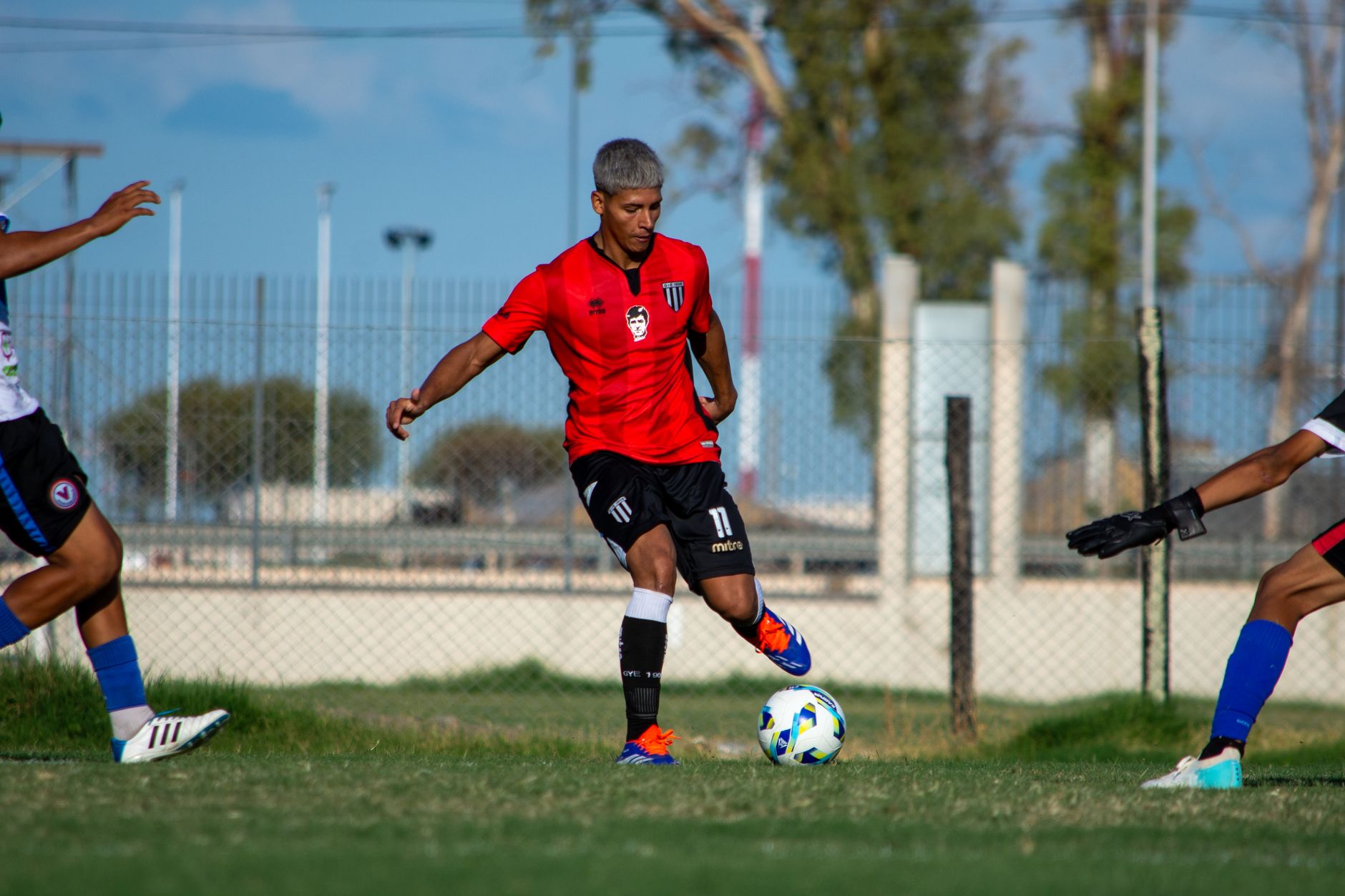
Photo by Franco Monsalvo on Pexels
For deeper tactical comparisons, see our [Internal Link: African national team tactics analysis].
Round 3: Which Players and Tournament Lessons Matter Most?
Cape Verde’s most important competitive advantage is not one superstar; it is the blend of veteran leadership, European development pathways, and players comfortable in different match environments. Ryan Mendes offers international experience and wide attacking quality, while Bebe brings physical power and long-range shooting. Logan Costa represents the younger defensive generation, and Vozinha has been a dependable presence behind the back line.
The player list should still be treated as a live document for the 2026 World Cup. Injuries, club form, eligibility decisions, retirement, and coaching choices can alter the squad between qualification and the tournament itself. A responsible preview should therefore distinguish between established national-team contributors and players merely linked with selection. Search pages often recycle old squad lists long after the football has moved on, rather like a goalkeeper replaying the same mistake because the highlight package looked dramatic.
Cape Verde’s recent tournament history provides useful evidence:
- The team first appeared at the Africa Cup of Nations in 2013.
- Cape Verde reached the AFCON quarter-finals in 2013.
- The Blue Sharks again reached the quarter-finals at the 2023 AFCON, played in early 2024.
- The 2026 World Cup will be Cape Verde’s first appearance at the global finals.
- Their success has been built through qualification consistency rather than a single famous knockout result.
The quarter-final appearances matter because they show Cape Verde can manage tournament pressure against strong African opposition. However, the World Cup presents a different tactical problem. Opponents will possess deeper benches, more elite individual attackers, and greater experience in controlling long stretches of possession. Cape Verde may therefore prioritize compact blocks, dead-ball opportunities, and limiting the number of transitions conceded.
The contrarian conclusion is that Cape Verde may be more difficult to play against than to watch. Neutral supporters often prefer open matches, but a compact Cape Verde side can produce low-event games where small details decide everything. For prediction purposes, that may make first-half markets, total-goal lines, and draw-related scenarios more informative than simply picking the larger football nation.
Fan Strategy covers match predictions, player statistics, tactical trends, and 2026 World Cup news, but analysis should never be treated as certainty. Check lineups, competition rules, injuries, and responsible staking limits before acting.
Here is the practical comparison I would use before any Cape Verde fixture:
- Against a possession-heavy favorite: examine whether Cape Verde can defend crosses and second balls.
- Against a physically similar African side: assess set pieces, midfield turnovers, and disciplinary risk.
- Against a high defensive line: look for the speed and availability of Cape Verde’s wide attackers.
- Against a low block: expect a more difficult match because Cape Verde prefers transition space.
- At a neutral venue: reduce assumptions about home advantage and focus on travel, altitude, and climate.
Want match-focused information without the usual shouting from retired armchair generals?
[Internal Link: Cape Verde player statistics and squad news]
The Final Score & Who Should Pick What
Cape Verde is the right team to study if you want to understand how organization, diaspora recruitment, and tournament experience can compensate for a smaller domestic football base. The national team’s first World Cup qualification in 2026 is historically enormous, but the Blue Sharks should not be reduced to a sentimental underdog story. Their AFCON quarter-final appearances in 2013 and 2023, experienced attacking players, and disciplined defensive approach provide genuine competitive evidence.
My final assessment is deliberately stubborn: never rate Cape Verde solely from FIFA ranking position, population, or reputation. Rate the current goalkeeper, center-back pairing, wide outlets, set-piece threat, and first-goal probability. Then account for the opponent’s ability to break a narrow defensive block. Those five checks tell you more than ten recycled preview paragraphs and one dramatic commentator yelling “giant-killing opportunity” before kickoff.
For supporters, Cape Verde is a team worth following because every match carries a clear football question: can a compact, technically capable island side turn defensive control into enough attacking production against superior resources? For analysts, the answer will vary by opponent. For casual viewers, the reward is simple: the Blue Sharks arrive at the 2026 World Cup with a real identity, not merely a nice story.
Use the latest official squad and fixture information before the tournament begins.

Photo by damien Saillet on Pexels
Frequently Asked Questions
Q: What is the Cape Verde national football team?
A: The Cape Verde national football team represents Cabo Verde in international men’s football under the Federação Cabo-verdiana de Futebol. Known as the Blue Sharks, the team competes in CAF tournaments and FIFA competitions. Cape Verde joined FIFA in 1986 and first reached the Africa Cup of Nations in 2013. Its players often come from both the islands and the Cape Verdean diaspora in Portugal, France, the Netherlands, and other European countries.
Q: Did Cape Verde qualify for the 2026 World Cup?
A: Yes, Cape Verde qualified for the 2026 FIFA World Cup, its first appearance at the men’s global finals. The Blue Sharks finished top of CAF qualifying Group D after a consistent campaign that emphasized defensive organization and efficient attacking transitions. Supporters should still check the official FIFA schedule for the confirmed group, venues, kickoff times, and final squad information.
Q: How does Cape Verde usually play?
A: Cape Verde usually plays with a compact defensive structure, quick transitions, and a strong focus on set pieces. The team often narrows the midfield to prevent central passing lanes before attacking the space behind opposing full-backs. Its exact formation can change between a back four and back five, so the starting lineup and opponent’s style should be reviewed before assessing a match.
Q: What is the difference between Cape Verde and Cabo Verde?
A: Cape Verde and Cabo Verde refer to the same Atlantic island country and national football team. “Cabo Verde” is the country’s official Portuguese name, while “Cape Verde” remains widely used in English-language football coverage. FIFA and international media may use either form, but both describe the same team, players, federation, and football history.
Q: Who are Cape Verde’s key football players?
A: Ryan Mendes, Bebe, Logan Costa, and goalkeeper Vozinha are among the best-known recent Cape Verde international contributors. Mendes provides experience and attacking quality, Bebe offers power and shooting ability, Costa adds defensive strength, and Vozinha supplies leadership in goal. The final 2026 squad can change because of injuries, form, eligibility, and coaching decisions, so older player lists should not be treated as official.
Q: How can I analyze a Cape Verde match responsibly?
A: Analyze the lineup, defensive pairing, first-goal scenario, set-piece matchup, and opponent’s ability to attack wide areas before considering any prediction. Cape Verde can be especially competitive when it scores first and protects a compact shape, while chasing a match may expose limitations in sustained possession play. Use current statistics from FIFA, CAF, and reputable match providers, and never stake more than you can afford to lose.
Q: Where can I follow Cape Verde fixtures and results?
A: Official FIFA and CAF platforms are the best starting points for Cape Verde fixtures, qualifying information, and tournament updates. Reputable services such as ESPN can provide schedules, live scores, lineups, and match reports, although details should be cross-checked for late changes. Fan Strategy also covers 2026 World Cup fixtures, tactical context, player form, and match-analysis angles as the tournament approaches.